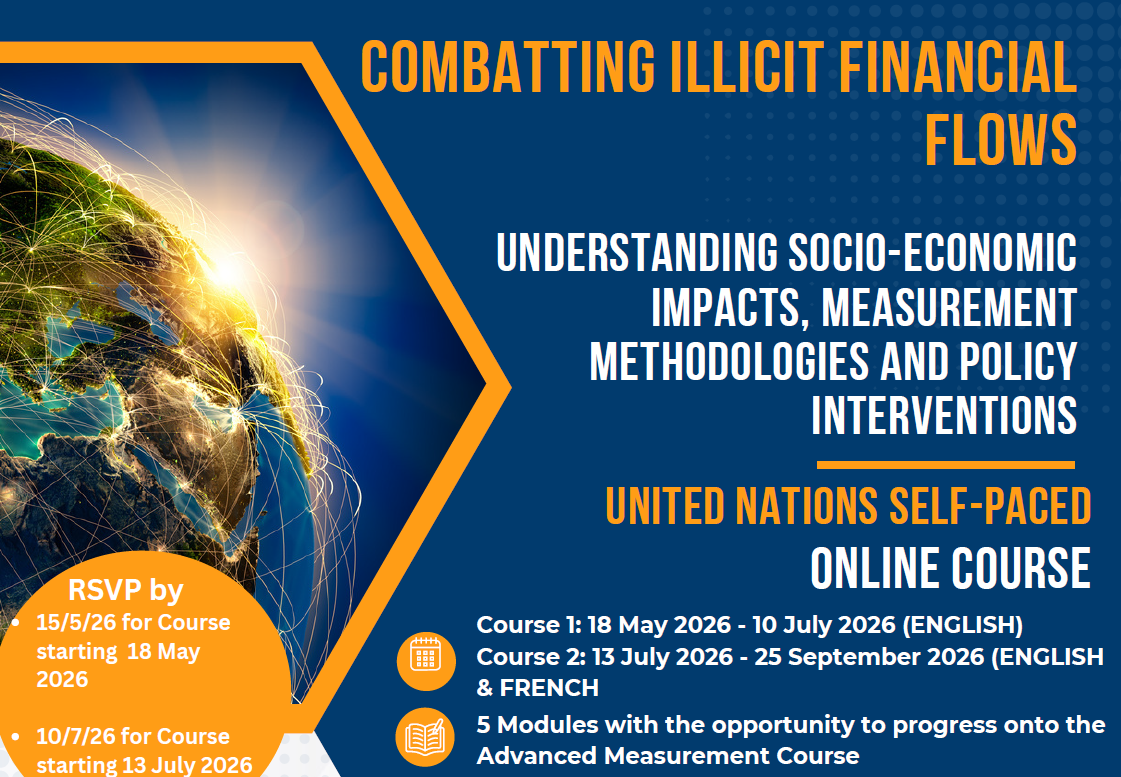
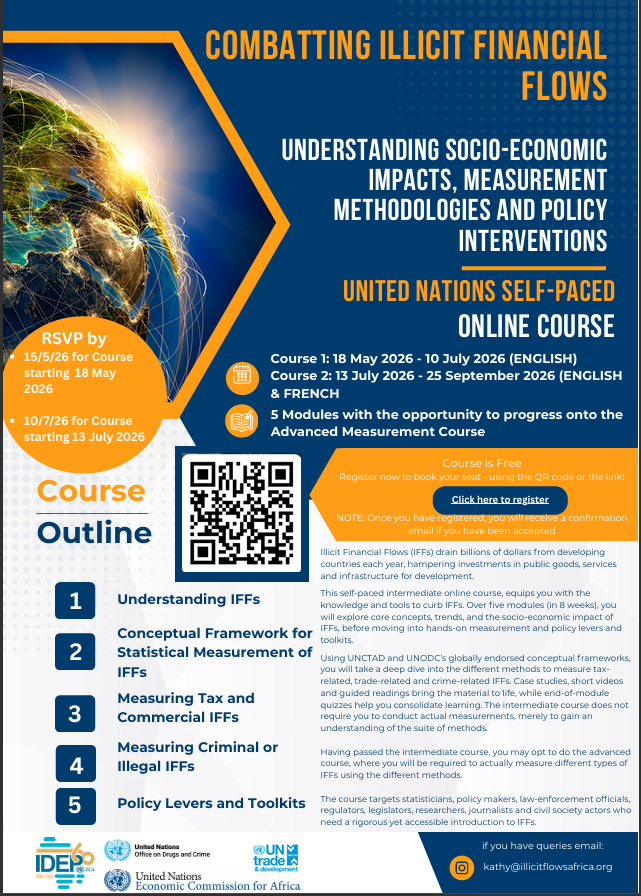
Combatting Illicit Financial Flows : Understanding socio-economic impacts, measurement methodologies and policy interventions
Description
Illicit Financial Flows (IFFs) drain billions of dollars from developing countries each year, hampering investments in public goods, services and infrastructure for development. This self-paced intermediate online course, equips you with the knowledge and tools to curb IFFs. Over five modules (in 8 weeks), you will explore core concepts, trends, and the socio-economic impact of IFFs, before moving into hands-on measurement and policy levers and toolkits. Using UNCTAD and UNODC’s globally endorsed conceptual frameworks, you will take a deep dive into the different methods to measure tax- related, trade-related and crime-related IFFs. Case studies, short videos and guided readings bring the material to life, while end-of-module quizzes help you consolidate learning. The intermediate course does not require you to conduct actual measurements, merely to gain an understanding of the suite of methods. Having passed the intermediate course, you may opt to do the advanced course, where you will be required to actually measure different types of IFFs using the different methods. The course targets statisticians, policy makers, law-enforcement officials, regulators, legislators, researchers, journalists and civil society actors who need a rigorous yet accessible introduction to IFFs.