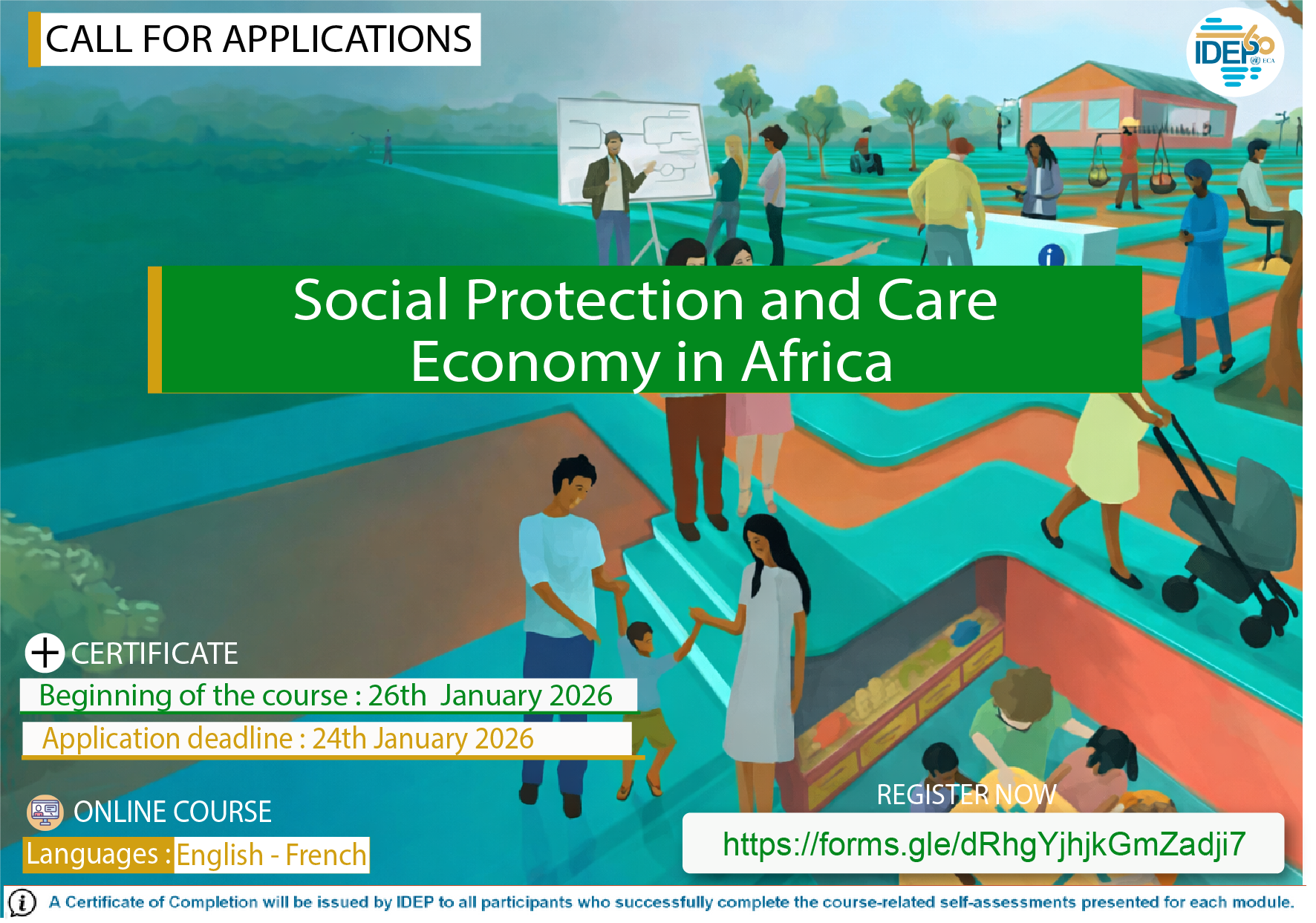
Social Protection and Care Economy in Africa
Announcement in Brief
|
Programme Rationale
African societies are currently undergoing major transformations that challenge their social protection systems and their vulnerable populations.
The first transformation is on the economic front. Africa got off to a strong start in the new century, emerging as the second fastest-growing region in the world during the 2000-2015 period (UNECA 2015). However, this growth has since slowed down, owing to the lingering effects of the global financial crisis and falling commodity prices. It has further ground to a halt in recent years, as health and geopolitical crises associated with the COVID-19 pandemic and the war in Ukraine1 exposed the continent’s high vulnerability to external factors. These trends had dire consequences on employment and economic security, given the limited diversification of the economy and its dependency on mining and extractive industries.
A second transformation is demographic. Since the 1990s, Africa has begun a profound demographic transition, including a decline in birth rates, continued urbanization, family nucleation, and incipient aging. Africa’s average birth rate fell from 6.3 in 1990 to under 4.5 today; city-ward migration expanded the share of urban population from 28 to 43%, despite higher fertility in rural areas; and life expectancy grew from roughly 50 to 61 years, despite the expected toll from the pandemic. Although some of these demographic trends portend opportunity, they also put pressure on urban employment and the care of vulnerable populations.
Objectives
The objective of the course is to provide middle and senior level officials and decision makers with comprehensive understanding social protection and care economy in Africa, including the design, financing, implementation and monitoring and evaluation of related policies and programs.
By the end of the capacity-enhancement training programme, the participants are expected to have acquired:
- Enhanced understanding of social protection frameworks and care systems.
- Knowledge of existing tools and mechanisms to address the financial sustainability of social protection systems, including insights into the relationship between social protection, public finances, and economic stability.
- Knowledgec and expertise to design, implement, monitor and evaluate Social Protection Policies
- Skills to develop strategies for advancing gender and care sensitive social protection and building shock-responsive systems that enhance resilience to unexpected events, ensuring better mitigation and preparedness.